

You walk into a pharmacy looking for an antioxidant supplement. On one shelf, you find vitamin C and E tablets. Next to them are CoQ10 capsules, glutathione supplements and bottles containing several antioxidant ingredients.
Each product offers something different, leaving you wondering which one would fit your daily health routine.
Perhaps you want to support your everyday nutrition, maintain your energy or add plant-based antioxidants to your diet. Understanding how these ingredients work can make your decision much simpler.
In this guide, we compare 10 popular antioxidant supplement types in India, explain their benefits in simple terms and highlight the key details that can help you choose a formula suited to your needs.
Key Highlights
- The best antioxidant supplement depends on your goal, food habits and existing supplements.
- A smaller milligram amount can be normal for some ingredients, such as astaxanthin.
- Antioxidant vitamins, CoQ10 and plant extracts play different roles in the body.
- Compare the actual serving, especially when you already use a multivitamin.
- Check medicine interactions and upper limits before choosing a daily formula.
Quick Answer: Which Antioxidant Supplement Is Best for Overall Health?
The best antioxidant supplement depends on your goal. Vitamins C and E are essential nutrients with antioxidant roles. CoQ10 is involved in cell-energy processes; curcumin is a turmeric-based option for joint-focused routines; and multivitamins combine several nutrients. Compare the ingredient, full serving and any medicines you take. The goal-based options below are starting points for comparison, not a ranking.
Best Antioxidant Supplements by Goal
|
Your goal |
Antioxidant type to compare |
|
Everyday vitamin intake |
Vitamin C or vitamin E; a multivitamin if you want several nutrients together |
|
Cell-energy focus |
CoQ10 |
|
Turmeric-led joint routine |
Curcumin |
|
Focused cell antioxidant |
Reduced glutathione |
|
Plant compounds |
Astaxanthin, resveratrol or grape seed extract |
|
Simple one-bottle routine |
A transparent multi-antioxidant blend |
Antioxidant Supplements at a Glance
|
Type |
Main role |
What matters on the label |
|
Vitamin C |
Immunity and collagen |
Daily vitamin C (mg) |
|
Vitamin E |
Cell protection |
Alpha-tocopherol amount |
|
CoQ10 |
Cell-energy support |
Ubiquinone or ubiquinol |
|
Curcumin |
Turmeric polyphenol |
Curcuminoid amount |
|
Astaxanthin |
Carotenoid antioxidant |
Source and mg |
|
Alpha-Lipoic Acid |
Cell metabolism |
Full ingredient name |
|
Glutathione |
Natural cell antioxidant |
Reduced form and mg |
|
Resveratrol |
Plant polyphenol |
Trans-resveratrol amount |
|
Selenium |
Antioxidant enzymes |
Daily micrograms (mcg) |
|
Grape Seed Extract |
Plant polyphenols |
Extract and standardisation |
How to Choose an Antioxidant Supplement
We compared the ten types using their main role, human research, serving size and available formats. Use the same checks when you compare specific products.
1. Match the Ingredient to Your Goal
A label should clearly name the main ingredient and its amount. A focused product may suit one clear goal; a blend brings several nutrients together.
2. Read the Full Serving
A bottle may say 500 mg on the front, while the back shows that the amount is for two tablets. Compare the recommended full serving, not just the biggest number.
3. Antioxidant Capsules vs Tablets
Both formats can fit a daily routine. Check the active amount, any added ingredients and the directions. Softgels are also common for fat-soluble antioxidants such as CoQ10 and vitamin E.
4. Check What You Already Take
Keep your multivitamin and other wellness bottles together when reading labels. This makes it easier to spot vitamin C, vitamin E, selenium or zinc listed more than once.
5. Check Testing and Label Transparency
Look for batch and expiry details, FSSAI information, the maker, ingredient amounts and accessible batch-test details. For herbal extracts, “standardised” tells you the stated amount of a key plant compound. A test report may also show checks for identity, purity or contaminants.
10 Antioxidant Types: Uses, Formats and Research
1. Vitamin C
Vitamin C may help support normal immune function and collagen formation, which is important for skin and gums. Guava, amla and oranges are familiar food sources. In a small four-week trial, supplementation increased blood vitamin C levels in adults whose levels were initially low. Vitamin C antioxidant supplements are available as tablets, capsules and powders.
Label tip: ICMR-NIN 2020 lists 80 mg/day for adult men and 65 mg/day for adult women from total intake. Check how much your food and multivitamin already provide.
2. Vitamin E
Vitamin E may help support cell-membrane protection as part of normal antioxidant activity. Almonds and sunflower seeds supply it in food. In a trial of 396 adults, vitamin E reduced one oxidative-stress marker, with results varying by their starting levels.
Label tip: An FSSAI reference annexure lists 7.5-10 mg alpha-tocopherol per day. It is an official reference range, not a single figure for every adult. Check the form and amount on the supplement label.
3. CoQ10
CoQ10 is made in the body and is involved in cell-energy production. A review of 34 trials reported improvements in some blood markers of antioxidant balance after supplementation. Its study doses differed across trials, so the amount used in research is not a personal target. Ubiquinone and ubiquinol are the two common label forms.
Label tip: Capsules and softgels are common. If you're considering CoQ10 for everyday energy, compare the form and amount per serving.
4. Curcumin
Curcumin is a turmeric compound studied for antioxidant balance and joint comfort. A review of 66 trials reported changes in several inflammation and antioxidant markers. Some formulas add piperine from black pepper to help support absorption; the exact curcuminoid form still matters when comparing products.
Label tip: When comparing curcumin supplements in India, check the curcuminoid amount, extract strength and daily serving.
5. Astaxanthin
Astaxanthin is a red-orange pigment derived from algae and found in some seafood. A review of 12 trials involving 380 participants reported a reduction in one blood marker of oxidative stress. Unlike essential vitamins such as C and E, astaxanthin has no established daily nutritional requirement.
Label tip: Look for the algae source and the amount of astaxanthin per softgel or capsule. Follow the serving directions provided for the specific formula.
6. Alpha-Lipoic Acid (ALA)
Alpha-lipoic acid is involved in the process that converts food into energy and contributes to normal antioxidant processes. A clinical trial involving women with episodic migraine measured changes in selected blood markers after supplementation. The study provides an example of its use in a specific research setting.
Label tip: ALA can also refer to alpha-linolenic acid, an omega-3 fat. Check the full ingredient name to ensure you're comparing the right supplement.
7. Glutathione
Glutathione is a natural antioxidant made and used by cells. In a six-month trial involving 54 adults, researchers tested a reduced glutathione ingredient called Setria. Glutathione levels rose in blood and cells collected from the inner cheek. The trial tested 250 mg and 1,000 mg daily.
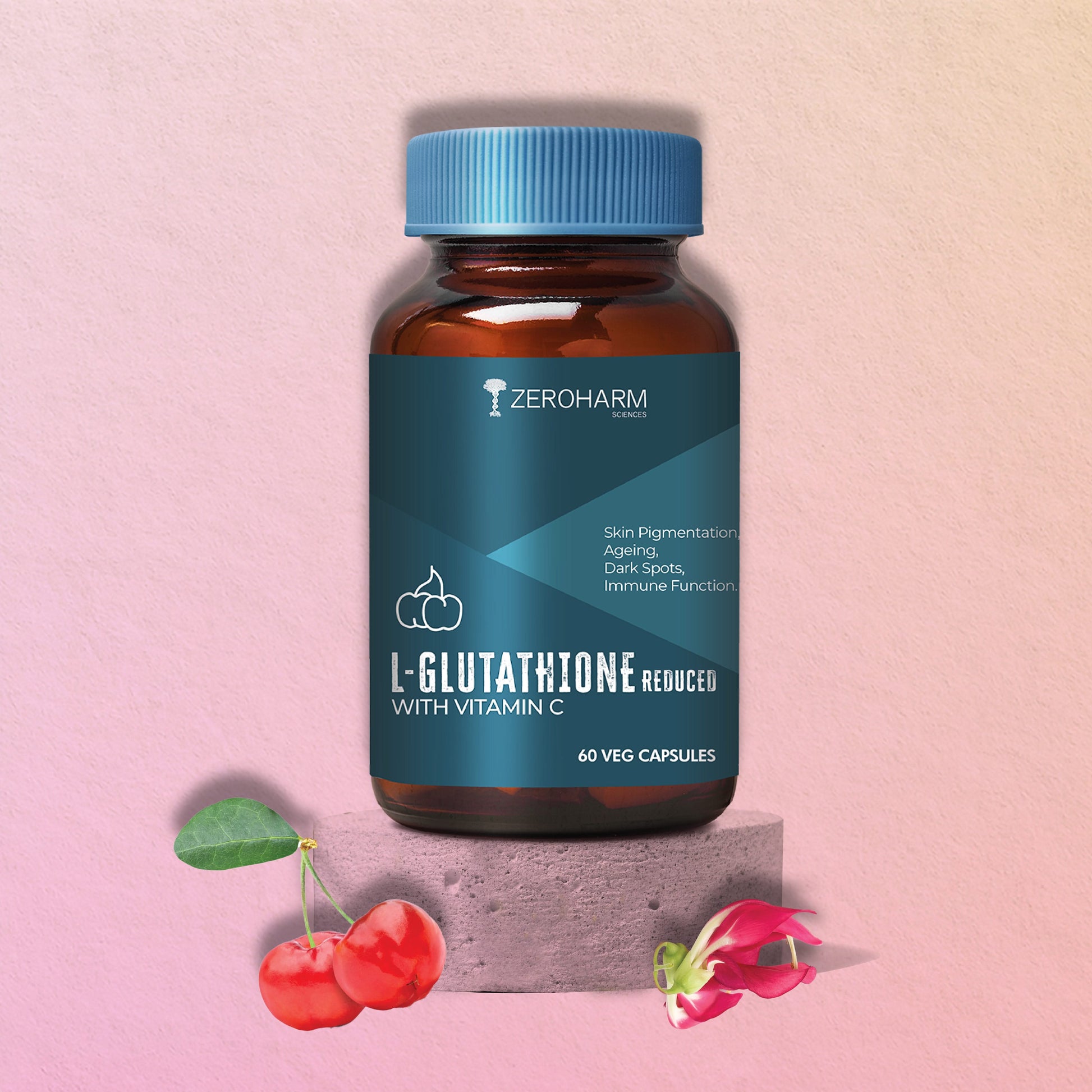
Label tip: When choosing a supplement containing L-glutathione with vitamin C, check the amount of reduced glutathione and the role of its supporting nutrients.
8. Resveratrol
Resveratrol is a plant compound found in grapes and berries. A review of 17 trials reported a change in flow-mediated dilation, a measure of how blood vessels respond to changes in blood flow. The findings offer useful insight into resveratrol's role in supporting healthy blood-vessel function.
Label tip: Research has explored different serving amounts, so check the daily quantity listed on your supplement.
9. Selenium
Selenium contributes to the normal function of antioxidant enzymes. A review of 13 trials reported increased activity of certain antioxidant enzymes with supplementation. Because selenium is needed in microgram amounts, taking multiple products can add up quickly.
Label tip: The ICMR-linked Indian adult reference is 40 mcg/day. Compare micrograms (mcg) from food, multivitamins and separate tablets before adding another product.
10. Grape Seed Extract / Polyphenol Formulas
Grape seed extract contains polyphenols, compounds also present in fruit and tea. A review of controlled trials reported changes in some blood markers associated with oxidative stress. Products may list either the whole extract amount or its standardised polyphenol content, which are not interchangeable.
Label tip: Some products list the whole grape seed extract amount, while others state the percentage of polyphenols. Compare these details when choosing a standalone supplement or blend.
Antioxidant Supplement Amounts: What Numbers Mean
These figures use ICMR-NIN 2020 reference intakes for vitamin C, FSSAI-published references for vitamin E and selenium, and examples from human studies for other ingredients. Research doses are not daily targets. For plant compounds without established requirements, follow the product label and consider any medicines you take.
|
Ingredient |
Reference amount / study example |
How to use it |
|
Vitamin C |
From food and supplements |
|
|
Vitamin E |
Check form and food sources |
|
|
Selenium |
Total from food and supplements |
|
|
CoQ10 |
Study subgroup finding, not a daily target |
|
|
Glutathione |
Setria trial doses; not universal targets |
|
|
Alpha-Lipoic Acid |
Migraine study; check diabetes medicines |
|
|
Astaxanthin |
No standard daily requirement |
Read mg amount and product label |
|
Curcumin |
No single amount across extract types |
Check actual curcuminoid strength |
|
Resveratrol |
No standard daily requirement |
Read trans-resveratrol amount |
|
Grape Seed Extract |
No standard daily requirement |
Check extract and polyphenol amount |
Single Antioxidant or Antioxidant Blend: Which Fits Your Routine?
When a Single Ingredient Makes Sense
Suppose your multivitamin already has vitamins C and E, but you are interested in CoQ10. A focused CoQ10 product makes the new ingredient and amount easy to identify. This suits people with one clear supplement goal.
When a Blend Makes Sense
A blend can bring vitamins, minerals and plant compounds together in one bottle. For example, a vitamin C and vitamin E combination may suit someone seeking both nutrients, provided the listed amounts fit their needs and existing supplements.
If one multivitamin gives you 60 mg vitamin C and 10 mg vitamin E, another antioxidant blend may repeat those nutrients. Compare both labels before choosing a separate product.
Choose a focused product for one ingredient goal and consider a blend when you want several clearly labelled nutrients in one routine.
How ZeroHarm Combines Antioxidants for Different Daily Needs
ZeroHarm offers formulas for different wellness needs. Each product name below links to its current ingredients, serving details and formulation features.
|
ZeroHarm product |
Why consider the formula |
|
CoQ10 for cell-energy support plus grape seed antioxidants and piperine |
|
|
Nano-formulated curcumin with piperine; may help support joint comfort |
|
|
Reduced glutathione with complementary antioxidant nutrients |
|
|
Everyday nutrients that include antioxidant vitamins and selenium |
|
|
Grape seed polyphenols and antioxidant vitamins alongside gut-focused probiotics |
How Antioxidant Supplements Support Everyday Wellness
Your body naturally forms reactive molecules as it uses oxygen. Antioxidants help keep this activity balanced. Food can provide many antioxidant compounds, while supplements can provide measured amounts when a particular ingredient suits your needs.
Start With Food, Then Choose Targeted Support
Amla, guava, nuts, seeds, dals and colourful vegetables bring different nutrients to an Indian plate. A focused supplement can complement those foods when you want a known daily amount of one nutrient or plant compound.
Can Antioxidant Supplements Be Taken Daily? Safety and Medicine Checks
Many antioxidant capsules and tablets are made for daily use. Follow the labelled serving and count overlapping ingredients. The safety points below help you know when a doctor or pharmacist should review a product.
|
Ingredient |
Useful safety check |
US NIH adult UL |
|
Vitamin C |
Very high doses can upset digestion; check if you have kidney or iron-overload concerns. |
2,000 mg/day |
|
Vitamin E |
Discuss high-dose use with a clinician if you take blood thinners or antiplatelet medicines. |
1,000 mg/day* |
|
CoQ10 |
Ask about possible interaction if you take warfarin. |
Not established |
|
Curcumin / piperine |
Discuss concentrated extracts if you take anticoagulants or other regular medicines; piperine may affect drug handling. |
Not established |
|
Astaxanthin |
Pregnancy safety data for concentrated supplements are limited; use only after clinician review. |
Not established |
|
Alpha-Lipoic Acid |
Review use alongside diabetes medicines because blood sugar may change. |
Not established |
|
Glutathione |
There is limited pregnancy safety evidence for oral high-dose supplements; review with your maternity care team. |
Not established |
|
Resveratrol |
Check with a clinician if you use blood-thinning medicines. |
Not established |
|
Selenium |
Total intake matters; long-term excess can affect hair and nails. |
400 mcg/day |
|
Grape Seed Extract |
Ask a clinician about combinations with medicines that affect blood clotting. |
Not established |
Vitamin E: The 1,000 mg/day US NIH upper limit applies to supplemental alpha-tocopherol, not vitamin E from food.
If you take regular medicines, keep a list of your supplements and their daily amounts. Sharing this with your doctor or pharmacist can help you choose a formula that suits your existing health routine.
Daily Amounts and Upper Limits
The US NIH publishes adult upper limits for vitamin C, vitamin E and selenium. The figures in the table are safety ceilings, not daily targets. Indian reference intakes appear above. “Not established” does not mean unlimited intake is safe.
Pregnancy and Long-Term Care
During pregnancy, breastfeeding, cancer treatment or long-term medical care, choose concentrated supplements with advice from your treating team. A medical review can help fit the ingredient to your existing medicines and care plan.
Need Help Reviewing Your Supplement Routine?
If you already use several supplements, a nutrition consultation can help you compare the ingredients with your diet. Your doctor or pharmacist should guide medicine-specific decisions.


 Whatsapp us